
In today’s fast-paced professional world, where adaptability and personal growth are key to success, coaching has emerged as a vital tool for individuals and organizations alike. Among the many approaches to coaching, evidence-based coaching stands out for its structured, results-oriented method that prioritizes effectiveness and accountability. But what exactly is evidence-based coaching, and why is it gaining momentum?
What Is Evidence-Based Coaching?
Evidence-based coaching is a systematic approach that draws from research, proven methodologies, and psychological principles to guide coaching practices. Rather than relying solely on intuition or generic techniques, evidence-based coaching integrates data, client feedback, and measurable outcomes to ensure coaching is both meaningful and impactful.

This approach ensures that coaching conversations are not only insightful but also lead to real-world progress and transformation. As introduced in one of our #FutureOfWork webinars by Paulette Lewis—founder of Bridge Excellence International and certified coach—evidence-based coaching is more than a conversation. It’s a dynamic process aimed at fostering tangible growth, overcoming personal and professional challenges, and unlocking untapped potential.
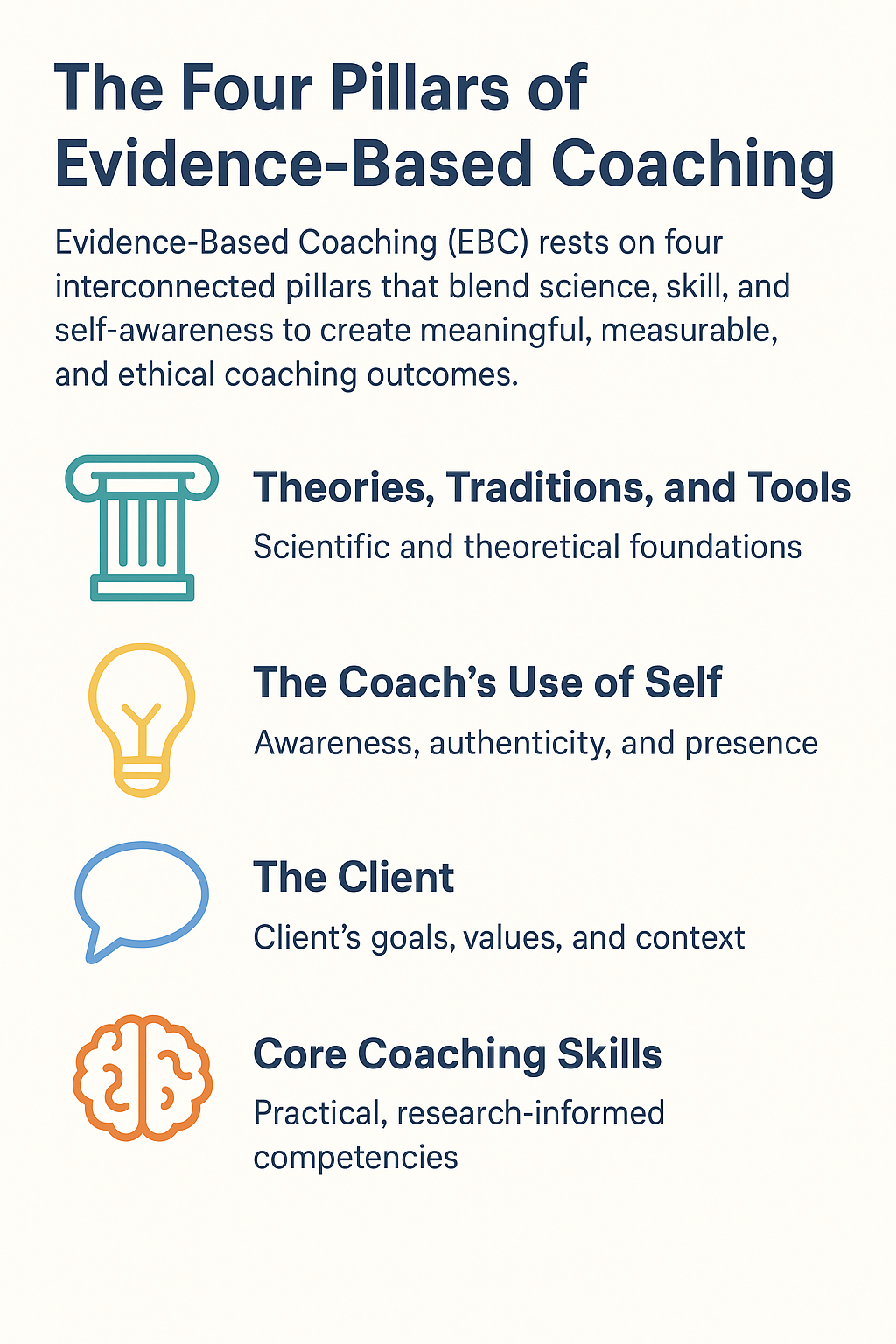
The Four Core Pillars of Evidence-Based Coaching
Evidence-Based Coaching (EBC) rests on four interconnected pillars that blend science, skill, and self-awareness to create meaningful, measurable, and ethical coaching outcomes. These pillars ensure that coaching remains grounded in research, reflective practice, and authentic human connection.
1. Theories, Traditions, and Tools
This pillar represents the scientific and theoretical foundation of coaching. Evidence-based coaches draw from established theories, traditions, and tools rooted in disciplines such as psychology, learning science, leadership studies, and neuroscience.
- Purpose: To ensure that coaching interventions are grounded in tested principles, not just intuition or trends.
- Includes:
- Psychological frameworks (e.g., cognitive-behavioral, positive psychology, systems theory)
- Learning and motivation models (e.g., goal-setting theory, self-determination theory)
- Structured coaching tools (e.g., GROW model, 360° feedback, strengths assessments)
- Outcome: The coach uses evidence-informed methods that are credible, ethical, and effective.
2. The Coach’s Use of Self
The “use of self” refers to how the coach’s awareness, authenticity, and presence shape the coaching relationship. An evidence-based coach recognizes that who they are—their mindset, biases, values, and emotional intelligence—profoundly affects their practice.
- Purpose: To develop reflective, self-aware practitioners who use themselves as instruments of change.
- Includes:
- Ongoing self-reflection and supervision
- Emotional regulation and mindfulness
- Ethical integrity and professional judgment
- Outcome: A coach who is present, balanced, and adaptive, using self-knowledge as a core part of evidence-based effectiveness.
3. The Client
At the heart of all coaching is the client’s reality, values, and aspirations. Evidence-based coaching is client-centered, meaning the coach works in partnership to tailor methods, pace, and goals to the client’s unique context.
- Purpose: To align the coaching process with the client’s lived experience and desired outcomes.
- Includes:
- Understanding client context, culture, and motivations
- Respecting autonomy and co-creating goals
- Encouraging insight, accountability, and sustained growth
- Outcome: Coaching that is personalized, empowering, and effective because it honors the client as the expert in their own life or work.
🧠 4. Core Coaching Skills
This pillar focuses on the practical skills and behaviors that enable effective coaching conversations. These skills are not just intuitive—they are supported by research in communication, psychology, and leadership.
- Purpose: To ensure coaches consistently demonstrate competence and impact in every session.
- Includes:
- Active listening and powerful questioning
- Goal setting and action planning
- Building trust, providing feedback, and fostering accountability
- Outcome: Coaches who apply their skills with intentionality and precision, creating measurable results supported by evidence-based practice.
Now let us Drill down into these Skills and expand on them
1. Listening: Truly Understanding Your Perspective
Active and empathetic listening forms the foundation of effective coaching. In an evidence-based context, this means deeply engaging with the client’s experiences, context, and goals. Listening goes beyond simply hearing words—it involves understanding emotional cues, underlying motivations, and barriers to success. This creates a safe, trusting environment where clients feel heard and valued, allowing for more authentic exploration of their needs and aspirations.
2. Asking: Uncovering Deeper Goals and Challenges
Strategic questioning is central to unlocking a client’s full potential. Rather than providing solutions, evidence-based coaches use targeted, thought-provoking questions to help clients identify their true goals, surface hidden challenges, and clarify their values. This process fosters critical self-reflection and empowers clients to take ownership of their journey.
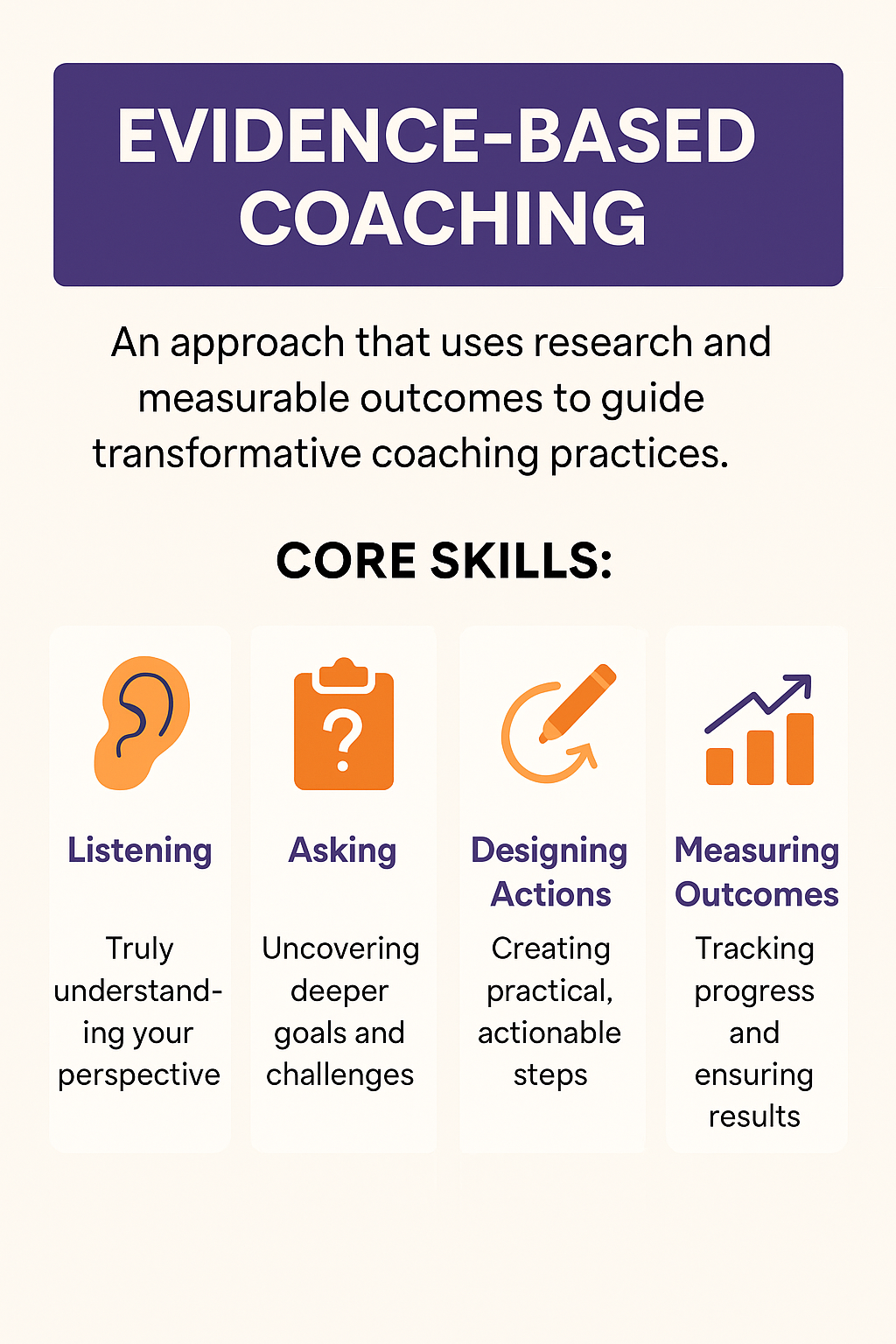
4. Measuring Outcomes: Tracking Progress and Ensuring Results
What sets evidence-based coaching apart is its commitment to accountability. Measuring outcomes involves tracking key indicators of success, reflecting on progress, and adjusting strategies as needed. This pillar reinforces the client’s momentum and ensures that coaching delivers tangible value over time. It also provides both coach and client with data-driven insights that guide the ongoing process.
The Benefits of Evidence-Based Coaching
Adopting an evidence-based approach brings numerous advantages:
- Greater clarity and focus on what truly matters to the client.
- Improved accountability through measurable goals and progress tracking.
- Enhanced self-awareness and confidence, built through reflective questioning and active listening.
- Stronger outcomes, driven by customized action plans and data-informed strategies.
This approach is particularly valuable in today’s workplace, where individuals must navigate complexity, change, and personal development simultaneously.
Coaching for the Future
As we envision the future of work, coaching will play an increasingly vital role in supporting professionals through transition, growth, and resilience-building. Evidence-based coaching, with its structured yet flexible approach, is uniquely positioned to meet these demands. It ensures that coaching is not just inspirational—but transformational.
Whether you’re an individual looking to break through barriers or an organization aiming to foster leadership and performance, embracing evidence-based coaching can provide the clarity, structure, and momentum needed to thrive.